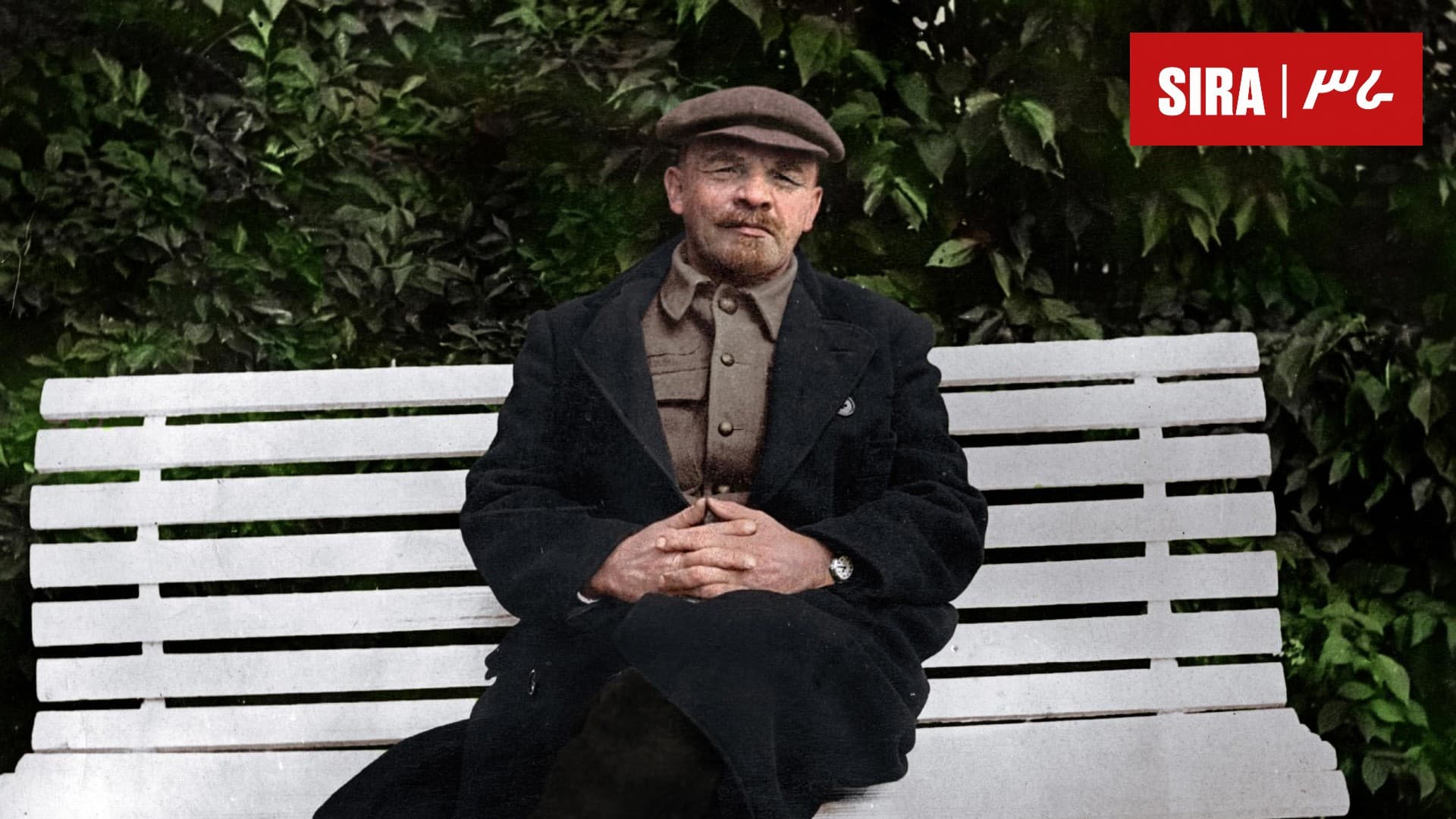
What Is to Be Done? Lenin's Answer to Why Nothing Changes
By Sidoc Haytu
Introduction: The Question Everyone Is Asking
Look around the world. In the last twenty years, millions have poured into the streets. In Ethiopia, in Sudan, in Kenya, in Nigeria, in Chile, in France, in the United States, in Sri Lanka, in Iran, in Myanmar. Workers have struck. Students have marched. Entire cities have been shut down.
And yet, nothing has fundamentally changed.
The same elites remain in power. The same compradors grow richer. The same IMF arrives with the same demands. The same police crush the same protests. The same ethnic divisions are stoked by the same politicians.
Why?
You probably think you know what class consciousness is. You probably believe that if workers just understood their exploitation, if they just read the right books, if they just organized the right way, everything would be different. But according to Vladimir Lenin — the man who led the first successful socialist revolution in history — most people have this completely backwards.
Understanding what revolutionary consciousness actually is, Lenin argued, is not a matter of abstract theory. It decides everything. It decides what kind of organization you build. It decides what kind of strategy you pursue. It decides whether the working class becomes the leading force in society — or whether it remains a tool in the hands of others.
This article is about Lenin's most important book: What Is to Be Done? Written in 1902, it remains the foundational text for anyone who wants to understand why revolutions succeed or fail. It is a book about consciousness, organization, and the hard, patient work of building a movement that can actually win.
This is not a history lesson. This is a guide for the present.
Part One: The Two Errors That Destroy Revolutionary Movements
Lenin identified two opposite errors that plague every attempt to build a revolutionary movement. They appear to be opposites. They are actually connected.
Error One: Economism — The Worship of the Immediate
The first error is called economism. The economists were socialists who believed that the working class should focus on its own immediate economic struggles. Higher wages. Better hours. Safer conditions. These were the things that mattered, they said. The big political questions — who controls the state, what kind of society should we build, how should wealth be distributed — were too far away from the daily lives of workers. They were distractions from the real work.
The economists had a newspaper called Rabocheye Dyelo. They criticized Lenin's newspaper, Iskra, for being too focused on theory and too little focused on the concrete problems of workers.
Listen to how one of their leaders, a man named Alexander Martynov, put it. He said: "We cannot confine ourselves solely to exposing the system. We must also react to the immediate and current interests of the proletariat." By "close organic contact with the proletarian struggle," Martynov meant that his group was on the ground fighting alongside workers while Lenin and his comrades were aloof intellectuals writing about abstract theory.
Lenin's response was devastating.
Error Two: Terrorism — The Worship of the Dramatic
The second error is terrorism. The terrorists were radicals who believed that dramatic, violent action could inspire the masses and force the autocracy to collapse. The propaganda of the deed. Individual acts of heroism that would ignite the fire.
On the surface, economism and terrorism look like opposites. One says the workers should focus on their own economic struggles. The other says a handful of dedicated revolutionaries should take dramatic action to inspire the masses. One is moderate. One is radical.
Lenin showed that both errors come from the same root.
The Root: Submission to Spontaneity
Lenin called this root spontaneity. Spontaneity means reacting without a conscious, long-term plan. It means doing what feels natural in the moment. It means going with the flow of the movement rather than shaping it.
The economists bow to the spontaneity of the labor movement. They follow where workers naturally go — toward immediate economic demands, toward trade union consciousness. The terrorists bow to the spontaneity of the passionate intellectual. They follow where their own anger takes them — toward dramatic action that they hope will inspire others.
Both reject conscious intervention. Both reject the hard work of developing a revolutionary strategy. Both, in their own way, leave the working class without leadership, without direction, without the political education that would allow them to become a ruling class.
Lenin wrote: "The economists and the terrorists merely bow to different poles of spontaneity. The economists bow to the spontaneity of the labor movement, pure and simple, while the terrorists bow to the spontaneity of the passionate indignation of intellectuals who lack the ability or opportunity to connect the revolutionary struggle and the working-class movement into an integral whole."
This is a crucial insight. If you want to build a movement that can actually change society, you cannot rely on spontaneity. You must consciously intervene. You must develop theory. You must educate. You must organize.
Part Two: What Is Revolutionary Consciousness?
Here is where Lenin makes his most important — and most misunderstood — argument.
Many people believe that workers will naturally become revolutionary through their struggles. If they fight against their boss for higher wages, they will gradually understand that the whole system is rigged. They will naturally move from economic struggle to political struggle. They will develop class consciousness organically.
Lenin says this is completely false.
The Factory Leaflet vs. the Political Leaflet
Lenin uses the example of leaflets — the simple political pamphlets that revolutionaries distribute to workers.
Imagine a leaflet distributed at a factory. It says: "Management is forcing twelve-hour shifts with no bathroom breaks. Demand better break schedules and fair wages." This leaflet names an abuse and demands a fix. It is useful. It agitates workers. It can win improvements.
But imagine another leaflet. It says: "This is not one bad manager. The company tracks your bathroom time because your body is treated as a machine part in a system that lets the owner become one of the richest men on earth. Fixing this shift is not enough. The question is who has power over your time and your body, and why."
Lenin says the second leaflet is a declaration of war.
Not because it is more aggressive in tone, but because it does something different. It teaches workers to see their treatment as one instance of a general pattern. It connects the specific abuse to the entire system. It does not ask management to be nicer. It asks who has power and why.
The economist leaflet stops at the factory gate. The political leaflet points to the state.
Why This Matters
Lenin argued that the economic struggle alone produces only trade union consciousness. Workers organize to defend their interests against their employer. They fight for better conditions. This is necessary. It is important. But it is not revolutionary.
Revolutionary consciousness requires something more. It requires that workers understand the relationship between their own exploitation and the entire political system. It requires that they see how the landlord, the judge, the police, the priest, the newspaper editor, and the politician all work together to maintain the same system of exploitation.
Lenin wrote: "Working class consciousness cannot be genuine political consciousness unless the workers are trained to respond to all cases of tyranny, oppression, violence, and abuse, no matter what class is affected."
This is the heart of Lenin's argument. Class consciousness is not just knowing that you are exploited. It is knowing how the entire system works — and understanding your position in relation to every other class, every other institution, every other force in society.
A worker who is angry about low pay has an economic complaint. A worker who understands why their factory was sold in a private equity buyout, why the local judge sides with the company in labor disputes, why the news treats a strike as disruptive — that worker has located themselves in a system. Same paycheck. Totally different level of understanding.
Part Three: Consciousness Comes from Outside
Here is where Lenin's argument becomes truly radical.
The economists believed that class consciousness develops from within the economic struggle. Workers fight, they learn, they become revolutionary. Lenin says this is backwards.
"Class political consciousness can be brought to the workers only from without," he wrote. "That is, only from outside the economic struggle."
This sounds strange. How can consciousness come from outside? Doesn't that mean intellectuals are telling workers what to think?
Lenin's answer is subtle. The "outside" he is talking about is not the outside of the working class. It is the outside of the economic struggle. Political knowledge — knowledge of how the state works, how other classes operate, how history has unfolded — cannot be gained from the factory floor alone. It must be brought in from other spheres of life.
Think about it. A worker who spends all their time in the factory learns about the factory. They learn about their boss, their hours, their wages. They do not learn about the landlord who owns their building, the politician who takes bribes from the company, the judge who rules against strikers, the priest who tells them to accept their lot, the journalist who writes editorials against unions.
To understand the system, you need to know about all of these. And you cannot learn that from your own economic experience alone.
Lenin wrote: "The social democrats must go among all classes of the population. They must dispatch units of their army in all directions."
This is not a call for intellectuals to lecture workers. It is a call for revolutionaries to gather knowledge from every sphere of society — from students, from peasants, from religious minorities, from intellectuals, from the oppressed of every kind — and to bring that knowledge together into a single, connected political picture.
The Tribune of the People
Lenin's model for the revolutionary is not the trade union secretary. It is the tribune of the people.
He wrote: "The social democrat's ideal should not be the trade union secretary, but the tribune of the people, who is able to react to every manifestation of tyranny and oppression, no matter where it appears, no matter what stratum or class of people it affects."
The tribune is someone who can take every injustice — a peasant evicted from their land, a student arrested for protesting, a religious minority persecuted by the state, a soldier abused by their officers — and weave them together into a single political narrative. The tribune shows how all of these separate struggles are connected. The tribune explains who benefits from the system and who suffers.
This is what the economists could not do. They could only fight for better wages in one factory. The tribune fights for the liberation of society as a whole.
Part Four: Why We Blame Ourselves, Not the Masses
Lenin asks a question that every organizer must confront:
Why do workers seem so passive? Why do they not rise up against all the injustices they face?
The economists had an answer: workers are too backward, too focused on their immediate needs, too disorganized to fight for anything beyond their own wages. We must be realistic. We must meet them where they are.
Lenin rejects this answer completely.
He writes: "Why do the Russian workers still manifest little revolutionary activity in response to the brutal treatment of the people by the police, the persecution of religious sects, the flogging of peasants, the outrageous censorship, the torture of soldiers, the persecution of the most innocent cultural undertakings? ... To adopt such an opinion is merely to direct the charge where it does not belong. To blame the working masses for one's own philistinism or opportunism."
In other words: if workers are not responding to the broader political struggle, it is not because they are incapable. It is because we — the revolutionaries — have failed to organize the exposures, to spread the political knowledge, to connect the struggles.
Lenin says we must blame ourselves. We have not yet built the platforms for exposure. We have not yet spread the message widely enough. We have not yet done the hard work of gathering political knowledge and bringing it to the masses.
"When we do that, and we must and can do it," he writes, "the most backward worker will understand or will feel that the students and the religious sects, the peasants and the authors are being abused and outraged by those same dark forces that are oppressing and crushing him at every step of his life."
This is a revolutionary optimism. The masses are not the problem. The leadership is.
Part Five: The Broken Compass of "Where People Are At"
There is a common idea in organizing today, often associated with the American organizer Saul Alinsky. It says that organizers should not bring in their own political theory. They should follow the community's own existing grievances and self-interest. They should meet people where they are at.
Lenin would call this tailism — following the tail of the movement instead of leading it.
The economists in Russia made a similar argument. They said: workers are interested in their own economic struggles. We should support those struggles. We should not burden them with abstract theory or long-term political visions. We should give them concrete demands that promise palpable results.
Lenin's response was brutal. He said this approach treats workers like children. It assumes they are incapable of understanding politics. It isolates them from the broader struggle. And it guarantees that the movement will never go beyond the trade union stage.
"We are not children to be fed on the thin gruel of economic politics alone," he imagines a worker saying. "We want to know everything that others know. We want to learn the details of all aspects of political life and to take part actively in every single political event."
Lenin says the worker is saying to the intellectuals: "You intellectuals can acquire this knowledge and it is your duty to bring it to us in a hundred and a thousandfold greater measure than you have done up to now. And you must bring it to us not only in the form of discussions, pamphlets, and articles, which very often, pardon our frankness, are rather dull, but precisely in the form of vivid exposures of what our government and our governing classes are doing at this very moment in all spheres of life."
The masses want to know. The intellectuals are failing to teach. That is the problem.
Part Six: The Vanguard and the Rearguard
Lenin is often accused of being authoritarian, of wanting a small elite to tell the workers what to do. His actual argument is the opposite.
He argues that the workers must become the leading force in society. They must understand every aspect of political life. They must be able to lead not just in the factory, but in every sphere — in the struggle against racism, against sexism, against national oppression, against imperialist war.
To do this, they need a vanguard — a leading organization that can gather knowledge, connect struggles, and provide strategic direction. But the vanguard is not a title you give yourself. It is something others recognize because you have earned it.
Lenin mocks the idea of declaring yourself the vanguard. He imagines a social democrat telling a liberal, "Our job is to add a bit of politics to the workers' economic struggles." The liberal would just smile. That is exactly what the liberal wants too. It keeps the workers focused on modest reforms, not on challenging who controls the economy.
A true vanguard does not fear the consciousness of the masses. It does not try to hold them back. It does not adapt itself to what is spontaneous. It strives to lead.
Lenin writes: "A vanguard which fears that consciousness will outstrip spontaneity, which fears to put forward a bold plan that would compel general recognition even among those who differ with us. Are they not confusing vanguard with rearguard?"
The rearguard follows the movement. The vanguard leads it. The rearguard adapts to what people are already doing. The vanguard shows them what they could do if they were organized, educated, and strategic.
Part Seven: Solidarity Without Surrender
Lenin is sometimes accused of contradicting himself. On the one hand, he says revolutionaries must work with liberals, students, peasants, and other opposition groups. On the other hand, he is ruthlessly critical of moderate Marxists. How can both be true?
The answer is simple. Lenin distinguishes between two different things:
Solidarity with the oppressed in their struggle for justice. When a liberal student is beaten by the police, you protest. When a peasant is flogged by the landlord, you expose it. When a religious minority is persecuted by the state, you defend them. You stand with everyone who fights against tyranny. This is solidarity.
Surrender to opportunism. When someone calls themselves a socialist but argues that workers should accept capitalism, that the state should be reformed rather than overthrown, that the struggle should be limited to wages and working conditions — you fight them. You do not pretend they are comrades. You do not let them lead the movement.
Lenin wrote: "Solidarity without independent judgment collapses into tailism. Independent judgment without solidarity collapses into irrelevant purism."
This is the balance. You stand with everyone who is oppressed, but you do not surrender your own political line. You do not let others define the struggle for you. You judge every movement by its own standards, and you always ask: whose interests does this serve?
Part Eight: The Newspaper That Organized a Revolution
In the final chapters of What Is to Be Done?, Lenin turns to concrete proposals. His solution to the problem of building a revolutionary movement is a newspaper.
But not just any newspaper. He calls for an all-Russia newspaper — a single, unified platform that gathers exposures from every corner of society and turns them into a connected political narrative.
Lenin explains that the problem is not that people are afraid to expose abuses. The problem is that they have nowhere to say it. No platform. No audience. No way to connect their specific struggle to the broader struggle. No way to turn isolated incidents into a national political story.
The newspaper solves this. It becomes the collective organizer. Exposures come in from one region, from one factory, from one community. They are collected, amplified, and distributed everywhere. A story about a strike in one city becomes a lesson for workers everywhere. A story about police brutality in one neighborhood becomes a reason for everyone to be angry.
Lenin writes: "Political exposures are as much a declaration of war against the government as economic exposures are a declaration of war against the factory owners."
And the more comprehensive the exposure, the more powerful the campaign. "The moral significance of this declaration of war will be all the greater the wider and more powerful the campaign of exposure will be and the more numerous and determined the social class that has declared war."
This is not just a newspaper. It is a machine for disintegrating the system. It turns every injustice into a weapon. It spreads distrust among the enemies of the people. It builds solidarity across every divide.
Part Nine: What Kind of Organization Do We Need?
The next chapters of What Is to Be Done? — which Lenin turns to next — are about organization. He argues for a party of professional revolutionaries. Not a loose, democratic, debating society. A disciplined, organized, conspiratorial body that can survive repression and lead the working class.
This argument split the socialist movement in two. It is still debated today.
The point is not to replicate Lenin's specific proposals from 1902. The point is to understand the logic behind them. If you want to build a movement that can actually win, you need an organization that is:
Disciplined. Not a collection of individuals doing their own thing, but a coherent body with a shared strategy.
Educated. Not relying on spontaneous activity, but consciously developing the political knowledge of its members.
Connected to the masses. Not an isolated sect, but a force that is present in every factory, every neighborhood, every struggle.
Strategic. Not reacting to events as they come, but planning for the long term.
Committed to the working class. Not serving the interests of intellectuals, not serving the interests of a narrow vanguard, but serving the liberation of the working class as a whole.
Conclusion: Lenin's Challenge to Us
Lenin's argument in What Is to Be Done? is a challenge to every organizer, every activist, every person who wants to change the world.
He says: if the masses are not rising up, do not blame the masses. Blame yourself.
He says: if the struggle is not spreading, do not wait for spontaneity. Build the organization that will spread it.
He says: if consciousness is not developing, do not adapt to the lowest level. Bring political knowledge to the masses in every way you can.
He says: if you want to be a vanguard, do not declare yourself one. Earn it.
This is not elitism. It is the opposite. It is the belief that the masses are capable of understanding the world, of leading society, of transforming themselves — if only the revolutionaries did their job.
In the twenty years of protests that have not led to revolution, in the uprisings that have not brought change, in the millions who have marched and gone home — Lenin's diagnosis still holds.
The problem is not the masses. The problem is us.
We have not organized the exposures. We have not connected the struggles. We have not built the organization. We have not brought the knowledge.
That is what is to be done.
Sidoc Haytu is an Ethiopian writer and researcher focused on political economy, class dynamics, and anti-imperialist movements in the Horn of Africa. If you are ready to build, not just read, join the movement at https://t.me/SiraPress.