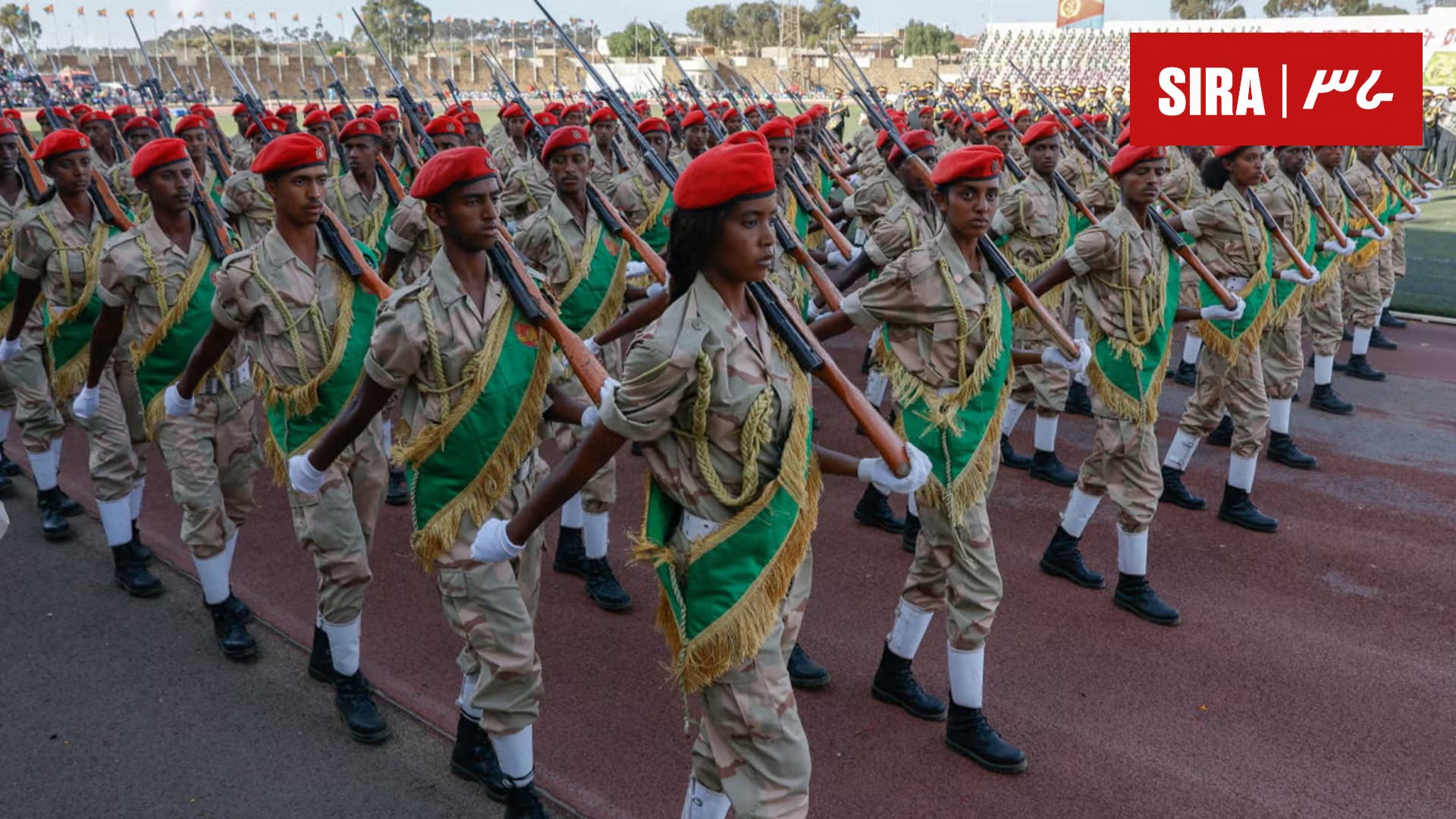
Why Trump Lifted Sanctions on Eritrea
By Sidoc Haytu
On September 18, 2026, the United States quietly lifted sanctions on Eritrea's military, its ruling party, and key economic entities. The sanctions had been imposed in 2021 under Executive Order 14046, targeting the Eritrean Defense Forces, the People's Front for Democracy and Justice, and the Red Sea Trading Corporation over Eritrea's role in the Tigray war.
The State Department's explanation was refreshingly honest: Trump chose not to renew the measures "to advance US regional interests".
Not human rights. Not accountability. Not peace. Regional interests.
Let us be clear about what this means.
The Tigray War and the Sanctions That Were
The 2021 sanctions were imposed because Eritrean forces, fighting alongside Ethiopian federal troops, were credibly accused of atrocities during the Tigray conflict. The war killed at least 600,000 people and left hundreds of thousands displaced. UN investigations documented extrajudicial killings, conflict-related sexual violence, attacks on civilians, and ethnic cleansing.
The UN Special Rapporteur on Eritrea concluded in June 2026—just three months before the sanctions were lifted—that there are "reasonable grounds to believe that crimes against humanity continue in Eritrea". The report documented ongoing systematic enforced disappearance, prolonged incommunicado detention, torture, and the persecution of political opponents, journalists, and religious communities. The government has never held national elections since independence in 1993. Indefinite national service remains a central feature of governance.
The Human Rights Council renewed the Special Rapporteur's mandate in July 2026, expressing "continued deep concern at the ongoing human rights violations and abuses".
Two months later, the United States lifted sanctions anyway.
The Real Reason: The Red Sea
The strategic context is not complicated.
The ongoing US-Israel war against Iran has blocked the Strait of Hormuz, making the Red Sea the primary alternative oil shipping route. The Bab el-Mandeb Strait—separating Eritrea from Yemen by roughly 20 nautical miles—has become a critical chokepoint for global trade.
Eritrea has over 1,000 kilometers of Red Sea coastline. Its southern coast and the port of Assab sit directly opposite Yemen, where Houthi forces have taken control of the entire Red Sea coastline and are threatening shipping.
The US needs Eritrea. Not because Eritrea has improved its human rights record. Not because Eritrea has withdrawn its troops from Ethiopian territory—which Ethiopia demanded in February 2026. The US needs Eritrea because of where it sits on the map.
The State Department's spokesperson said it was "time to adapt our foreign policy to current realities". Translation: human rights are a luxury we cannot afford when oil shipping lanes are at stake.
The Regional Chessboard
The sanctions lift did not happen in a vacuum. It is part of a broader realignment in the Horn of Africa.
Eritrea's Foreign Minister Osman Saleh has accused the UAE of pursuing "port imperialism" across Africa and seeking a Red Sea naval base for joint use with Israel. Ethiopia has moved closer to the UAE and Israel, deploying Emirati drones in Sudan's civil war. Eritrea, meanwhile, supports the Sudanese Armed Forces alongside Egypt, Turkey, and Saudi Arabia.
The US is not lifting sanctions because Eritrea is a responsible member of the international community. The US is lifting sanctions because it wants to pry Eritrea away from its current alignments and position itself for influence in the Red Sea competition.
The sanctions were never about protecting Tigrayans or holding Isaias Afwerki accountable. They were a bargaining chip. Now the chip has been cashed in.
The Hypocrisy of "Rules-Based Order"
Western governments love to speak of a "rules-based international order." They invoke human rights, accountability, and the responsibility to protect. They impose sanctions on countries that violate these principles—until those sanctions become inconvenient.
Eritrea is a country where:
- Crimes against humanity continue with impunity, according to the UN Special Rapporteur
- Enforced disappearances are a central feature of governance
- No national elections have been held since 1993
- Indefinite conscription traps generations in forced labor
- Transnational repression targets Eritreans abroad
The United States knew all of this. The sanctions were imposed under a Democratic administration citing these very concerns. They were renewed annually—including by Trump himself last year.
And then, in September 2026, the national emergency "expired".
The US did not lift sanctions because Eritrea changed. The US lifted sanctions because the US changed its priorities.
What This Means for Ethiopia
The lifting of sanctions on Eritrea is a direct signal to Ethiopia.
Ethiopia demanded in February 2026 that Eritrea "immediately withdraw" its troops from Ethiopian territory and cease supporting rebel groups. Eritrea rejected the accusations as "false and fabricated". Tensions remain high, with fears of renewed conflict between the two countries that fought a devastating border war from 1998 to 2000.
By lifting sanctions on Eritrea, the United States is effectively saying: we will not use leverage to constrain Eritrea's behavior toward Ethiopia. The US is prioritizing its own Red Sea interests over Ethiopian sovereignty.
This should not surprise anyone. The US has never prioritized Ethiopian interests. The US prioritizes American interests. And right now, American interests require a stable relationship with Eritrea—human rights be damned.
The Lesson
The lifting of sanctions on Eritrea is a reminder of something the Global South has always known: Western human rights discourse is conditional.
Sanctions are imposed when they serve strategic objectives. Sanctions are lifted when they become obstacles to those objectives. The human rights of Tigrayans, Eritreans, and Ethiopians are not the point. The point is control of the Red Sea.
The US State Department's spokesperson said the decision was made "to advance US regional interests". That is the most honest statement to come out of Washington in years. It tells you exactly what the sanctions were for. They were never about protecting anyone. They were about projecting power.
And now, the projection of power requires a different approach. So the sanctions disappear.
The Tigrayans who died in the war will not be remembered. The Eritrean conscripts who have never known freedom will not be liberated. The Red Sea will be contested by empires, as it always has been.
The rules-based order is a fiction. The only rule is power.
Sidoc Haytu is an Ethiopian writer and researcher focused on political economy, class dynamics, and anti-imperialist movements in the Horn of Africa. If you are ready to build, not just read, join the movement at https://t.me/SiraPress.


